Aspiring Scientists Summer Internship Program (ASSIP)

Overview

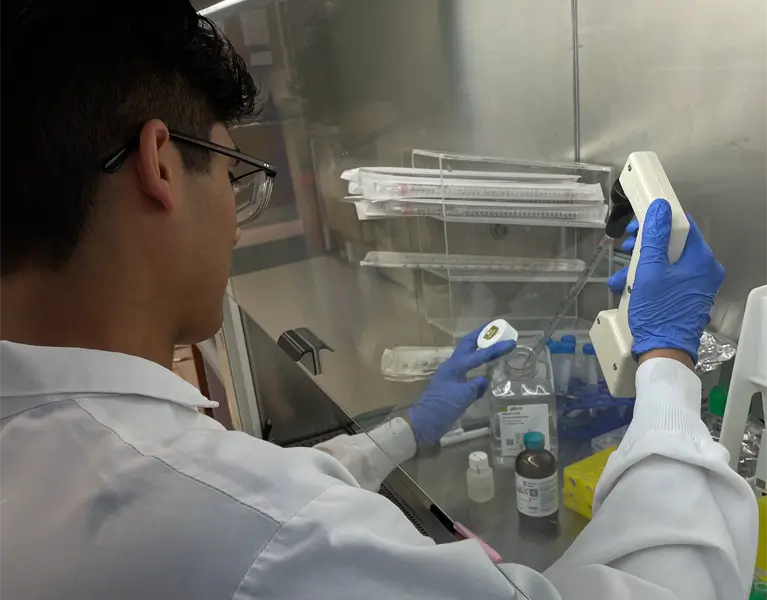
At the Center for Applied Proteomics and Molecular Medicine at George Mason University, I conducted research through the Aspiring Scientists Summer Internship Program, which admits approximately nine percent of applicants each year. I worked under Dr. Lance Liotta, who is the former Deputy Director of the National Institutes of Health and a pioneer in proteomics and translational medicine.
My primary project involved assisting my mentor, Purva Gade, and our research team in the discovery of a new cellular process known as secretory mitophagy. This process describes how cells export damaged mitochondria rather than degrade them internally. Our work was published in Frontiers in Cell and Developmental Biology, which is one of the ten leading journals in cell biology. I also contributed to three additional publications in the Journal of Student Scientist Research that expanded on this discovery through diagnostic and metabolic studies.

Discovery of Secretory Mitophagy and Advances in Translational Oncology

Research Focus

Mitochondria are essential for maintaining energy production and cellular health. When these organelles become damaged, cells normally recycle them through a process called mitophagy, which directs mitochondria to lysosomes for degradation.
Our project identified an alternative pathway called secretory mitophagy. This process allows cells to package and release damaged mitochondria into the extracellular environment instead of degrading them internally. This finding revealed a previously unknown mechanism of mitochondrial quality control. The discovery provides insight into how cancer cells maintain energy balance and resist apoptosis by exporting dysfunctional mitochondria. It also has implications for other diseases that involve mitochondrial dysfunction, including neurodegenerative and metabolic disorders.

My Contributions

Outcomes and Impact

This research resulted in the first published description of secretory mitophagy, which established a new understanding of how cells manage damaged mitochondria. The discovery was published in Frontiers in Cell and Developmental Biology, which is a highly ranked journal in the field. I also co-authored three additional studies in the Journal of Student Scientist Research, which extended our findings to the development of diagnostic tools and analyses of cancer cell metabolism. This experience marked my introduction to translational oncology, where cellular discoveries contribute directly to clinical understanding and therapeutic strategy.

Reflection

Working in Dr. Liotta’s lab taught me that discovery is a process of patience and observation. Every anomaly in the data is an opportunity to learn something new about how cells function. Being the youngest member of a team led by a scientist of Dr. Liotta’s stature showed me what rigorous, high-impact research looks like in practice. Contributing to the design of experimental methods at this level taught me the importance of both precision and creativity in scientific work. This experience reinforced my goal to pursue research that connects molecular insight to medical application.